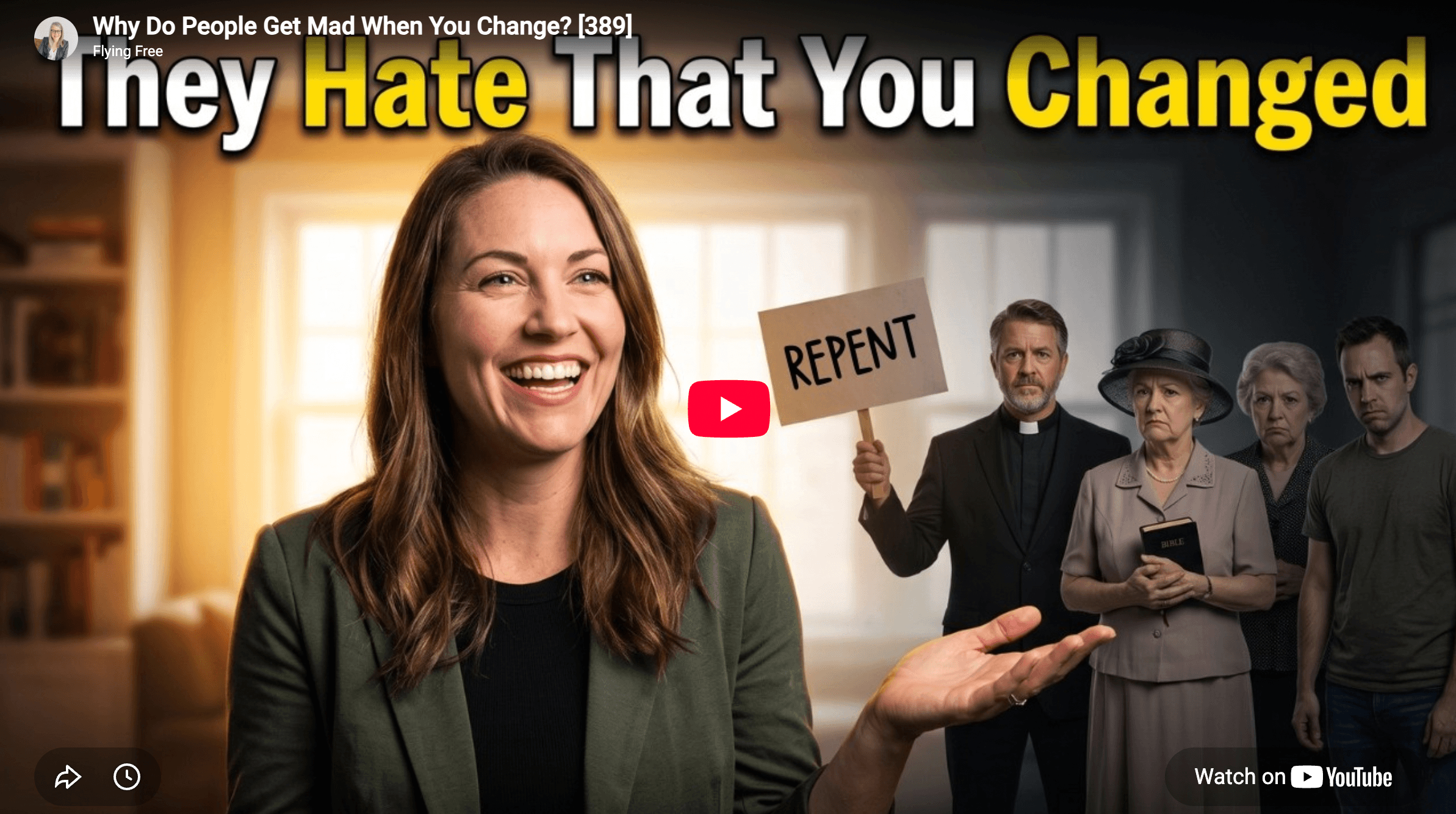
A lot of people got mad at me when I started to change over ten years ago. They got so mad, they booted me out of my church and my family. In this episode, I’m going to tell you about a book that changed the way I parent, lead, and show up in my own life.
It’s a book about what it actually takes to become the leader of your own life when everyone around you wants things to stay the same.
Key Takeaways:
- The real reason people push back when you change
- A phrase that completely redefines what “good parenting” actually looks like
- The difference between healthy empathy and “toxic empathy”
- Why criticism might actually be evidence that you’re finally functioning better
- The three universal laws about children and parents that will make you rethink your entire approach to leadership in the home
I want to give you a free gift. It’s the audio version of my book, All the Scary Little Gods. It’s a spiritual memoir about healing from religious trauma and toxic programming. You can listen to it FREE by going to scarylittlegods.com
I will also send you my weekly Hope Letters for Christian women in emotionally and spiritually abusive marriages. You’ll stay connected to me, my work, education, and HOPE that will change your life.
AI generated summary:
Why Do People Get Mad When You Change?
Flying Free Podcast, Episode 389
Quick Summary: In this episode, Natalie Hoffman breaks down the leadership book A Failure of Nerve by Edwin Friedman and applies its principles to becoming the leader of your own life. The core idea: strong leadership doesn’t come from more information or more courage, but from the willingness to tolerate other people’s disapproval. Natalie explains self-differentiation, toxic empathy, and why pushback from others is often a sign of progress rather than failure.
Key Topics Covered
The episode explores five core themes from Friedman’s book and applies them to personal growth, parenting, and recovery from high control religious or relational dynamics:
- Self-differentiation: maintaining a clear sense of identity and values while staying connected to others, without letting their fear or anxiety dictate your choices
- Systemic pushback: why any system (family, church, marriage) resists a leader who disrupts the status quo, and why chronic criticism can signal that a leader is functioning well
- Toxic empathy: the distinction between healthy compassion and an unhealthy overemphasis on peacekeeping that caters to the least mature, most anxious people in a relationship
- Three universal laws of parenting: Friedman’s research findings on how children mature relative to their parents’ own emotional development
- Leadership as a mission: the idea that every person’s core responsibility is to lead their own life first, before leading children, teams, or communities
Book referenced: A Failure of Nerve: Leadership in the Age of the Quick Fix by Edwin Friedman
Related resource: All the Scary Little Gods by Natalie Hoffman
Frequently Asked Questions
What is self-differentiation?
Self-differentiation is the ability to maintain a clear sense of your own identity, values, and direction while remaining emotionally connected to others, without letting their fear, anxiety, or disapproval control your decisions.
Why do people get upset when I start making healthy changes?
When someone disrupts a long-standing relational or family pattern, the system around them often resists and tries to pull them back into the old status quo. This pushback is a predictable response to change, not evidence that the change is wrong.
What is toxic empathy?
Toxic empathy occurs when an overemphasis on peacekeeping and easing others’ discomfort causes a person or organization to adapt to its least mature, most anxious members, rather than making healthy but uncomfortable decisions.
What book does Natalie recommend in this episode?
A Failure of Nerve: Leadership in the Age of the Quick Fix by Edwin Friedman, a rabbi and family therapist. Natalie is leading her Flying Higher mentorship group through the book chapter by chapter starting in October.
Where can I learn more or get support with this kind of leadership work?
Foundational courses are available at joinflyingfree.com. The mentorship group studying this book together starts in October at joinflyinghigher.com.